Longest In-Orbit Burn with Steam-Based Propulsion Set for Artemis II CubeSat

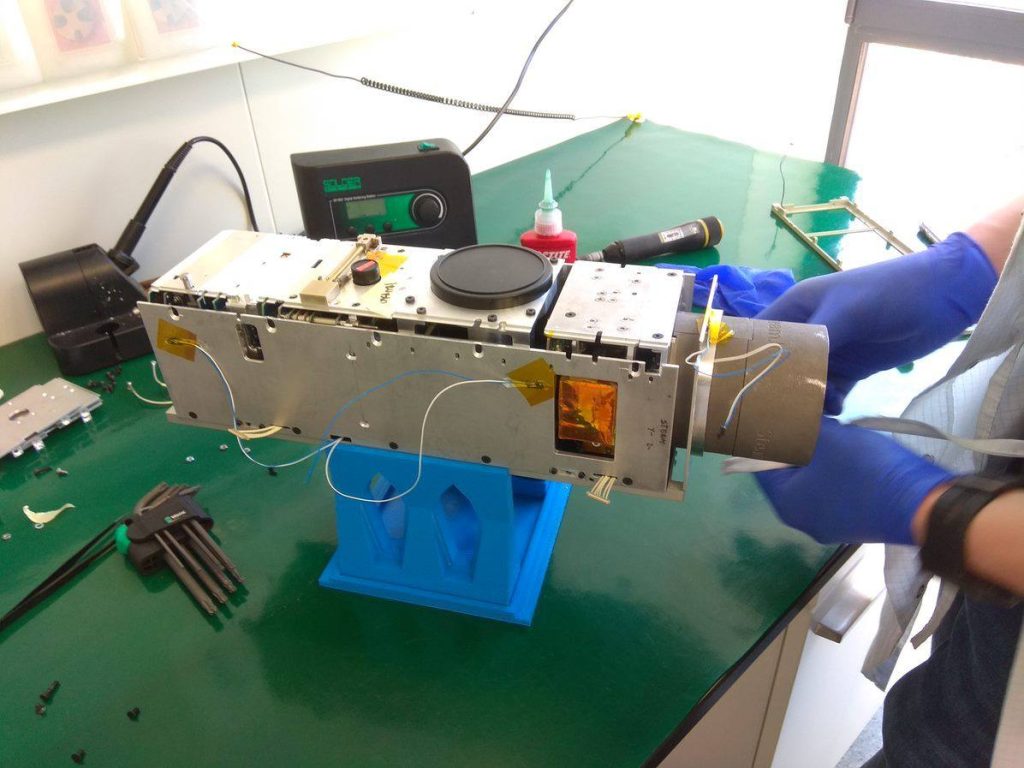
SteamJet space propulsion system

SteamJet Space Systems will demonstrate spacecraft propulsion during the upcoming Artemis II mission with an orbiting correction for South Korea’s K-RadCube satellite to prevent its re-entry into the atmosphere. The manoeuvre uses a straightforward application of water.

K-Rad Cube satellite, developed by South Korean NaraSpace, will be onboard NASA’s historic Artemis II mission, the first manned lunar mission in over 50 years. The CubeSat will face a challenge after it is deployed into a highly elliptical orbit. Its first perigee is within Earth’s upper atmosphere. Without orbital correction, the satellite will be lost.

That’s where SteamJet’s water thruster steps in.

“This mission is about demonstrating what water-based propulsion can do in high-stakes, real-world conditions,” said Marco Pavan, CEO of SteamJet Space Systems. “We’re performing a high-thrust, high-precision manoeuvre that was once reserved for chemical systems.”

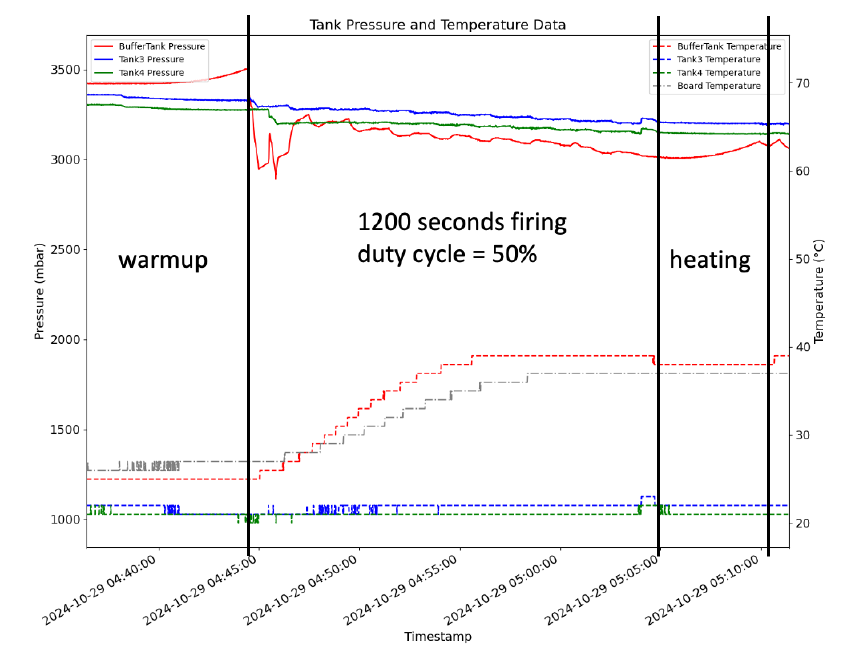
Configuring the thruster to operate safely and efficiently over the prolonged burn presented one of the mission’s key challenges. For this reason, the team had to ensure the engine would not overheat. At the same time, the satellite needed to remain within safe temperature limits. In addition, sufficient heat was required to generate the needed thrust. All systems had to remain stable and operate smoothly for approximately 12 hours.

Mission Objective

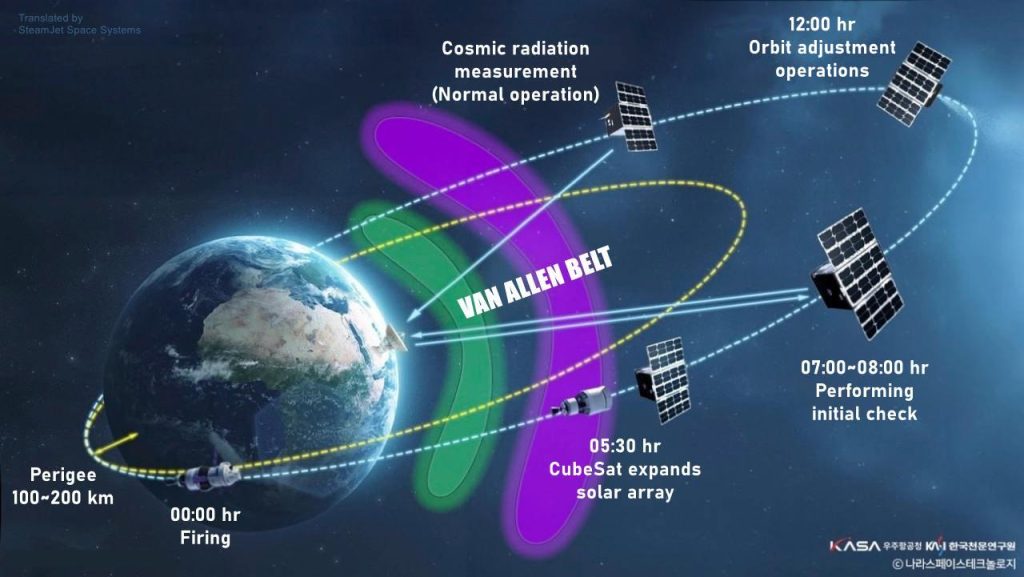
The primary mission of the K-RadCube is to monitor cosmic radiation and analyse its effects on astronauts as it passes through the Van Allen radiation belts, located more than 1,000 kilometres above Earth. However, to extend its mission duration and avoid atmospheric re-entry after the first orbit, the satellite must raise its perigee to 200 km.

To achieve this, SteamJet’s spacecraft propulsion system will conduct a prolonged 12-hour burn, one of the longest single burns ever performed by a water-based thruster in space. The manoeuvre is intended to extend the operational mission lifespan.

Key Mission Parameters:

Launch Orbit: Highly elliptical, ~70,000 km apogee

Corrective Action: 12-hour prolonged burn to raise perigee to ~200 km

Propulsion System: SteamJet Thruster One (water-powered)

According to our calculations, the thruster will deliver more than 250 Ns of impulse, corresponding to roughly 170 g of water — about a quarter of the capacity of our tanksAs a result, a significant propellant margin remains for the mission.

SteamJet Water Thruster Powers Critical Artemis II CubeSat Maneuver

Redefining the Frontiers of Green Propulsion

Previously, CubeSats that operate in these harsh environments would have required chemical propulsion — a costly, toxic, and complex solution. In contrast, SteamJet’s spacecraft propulsion technology offers the same performance without the hazards, a scalable option for deep-space and high-energy orbit missions.

Overall, the mission is a demonstration of sustainable propulsion for demanding orbit applications, enabling future CubeSats to conduct complex missions that were not possible without sacrificing safety or sustainability.

About SteamJet Space Systems

SteamJet Space Systems is a UK-based space propulsion company offering high-performance, water-based thrusters for CubeSats and Small Satellites. By utilising green propellants and intelligent engineering, SteamJet enables complex in-space missions without resorting to toxic or high-pressure systems.

Detailed technical specifications, test data, and CAD models for the Steam Thruster One are available on the website. Discover how SteamJet innovations are shaping the future of sustainable satellite propulsion.

SteamJet Water Thruster Selected for Artemis II CubeSat Critical Orbit Correction

SteamJet Water Thruster Powers Critical Artemis II CubeSat Maneuver

UK-based startup SteamJet Space Systems has been selected to provide the propulsion unit for an ambitious CubeSat mission flying as part of Artemis II, NASA’s first crewed return to the Moon in more than 50 years. The mission represents a major milestone for both SteamJet and sustainable in-space propulsion technologies.

The CubeSat, developed by South Korea’s NaraSpace, will operate in a highly elliptical Earth orbit. Once released, SteamJet’s water-based propulsion system will play a critical role in preventing atmospheric re-entry and enabling the spacecraft to carry out its scientific mission.

SteamJet Propulsion Supporting the Artemis II Mission

“Our participation in a mission that is part of NASA’s Artemis II programme is a major milestone for our team,” said Marco Pavan, CEO of SteamJet Space Systems.

“This selection validates our technology as both sustainable and capable of operating in complex orbital environments. It demonstrates that CubeSats and small satellites no longer need to compromise on performance to adopt green propulsion solutions.”

The CubeSat, named K‑RadCube, will initially be placed into a highly elliptical orbit with an apogee of approximately 70,000 km and a critically low perigee. Without corrective manoeuvres, the spacecraft would re-enter Earth’s atmosphere during its very first orbit.

High-Performance Orbital Manoeuvre Using Water-Based Propulsion

Traditionally, only chemical propulsion systems, with their high thrust and specific impulse, could perform such rapid and demanding orbital corrections. SteamJet’s propulsion system however, achieves comparable performance using water as propellant.

Shortly after deployment, the thruster will execute a continuous 12-hour burn to raise the perigee to approximately 200 km. This manoeuvre will prevent atmospheric re-entry and allow the spacecraft to operate safely within Earth’s radiation belts.

If successful, this operation will represent one of the longest continuous in-orbit burns ever performed by a water-based propulsion system, setting a new benchmark for sustainable in-space propulsion.

SteamJet Water Thruster Powers Critical Artemis II CubeSat Maneuver

Key Objectives of the SteamJet Thruster on Artemis II

 
  1. Perigee correction to approximately 200 km
  2. Orbit adjustment and stabilisation
  3. Extension of the CubeSat operational lifetime
This mission therefore demonstrates how sustainable propulsion technologies can now support advanced orbital operations for CubeSats and small satellites. SteamJet’s system delivers high performance without the use of toxic or high-pressure propellants, offering a safer and greener alternative to traditional chemical propulsion.
About SteamJet Space Systems

SteamJet Space Systems is a UK-based startup developing water-based propulsion systems for CubeSats and Small Satellites. Its proprietary steam-generation technology offers a green, safe, and sustainable alternative for in-space manoeuvres, enabling precise orbital control without the use of toxic or high-pressure propellants.

Detailed technical specifications, test data, and CAD models for the Steam Thruster One are available on the website. Discover how SteamJet innovations are shaping the future of sustainable satellite propulsion.

From Classroom to Orbit: Train Future Engineers with SteamJet CubeSat Propulsion Systems

CubeSat propulsion systems for education

Today, the space industry is developing rapidly, which presents additional challenges to academic programs. It is no longer sufficient to teach theory to students who train for careers in aerospace, satellite operations, and mission control. They need hands-on, practical experience with real CubeSat propulsion systems. However, many university programs still offer simulation-based learning in a classroom, which leads to a critical gap between education and actual spaceflight experience.

The Aerospace Education Gap in CubeSat Propulsion

Many universities worldwide provide excellent fundamental knowledge in orbital mechanics, control systems, satellite design, and mission planning. Students run simulations, model satellite behaviors, and plan maneuvers. But many recent graduates find themselves not fully prepared for real-world in-orbit operations.

This gap between theory and practice is particularly noticeable in areas like CubeSat propulsion technology, trajectory optimization, and satellite navigation. Lack of operational experience may lead to expensive mistakes. Thus, it is clear that students need earlier access to real spacecraft systems.

Why Hands-On CubeSat Propulsion Training Matters

There is a big difference between simulation and operating a thruster in orbit. When students install thrusters, test them, and eventually operate them in flight, they gain invaluable technical and problem-solving skills, as well as build professional confidence. These kinds of skills and approaches are impossible to teach only through software tools.

Real-life experience with propulsion systems allows students to practice mission-critical roles:

  • Planning and executing orbital maneuvers
  • Monitoring system performance
  • Diagnosing and responding to challenges in real-time

Steam-Based CubeSat Propulsion for Universities

Steam-based propulsion systems are a perfect fit for educational programs. Our technology uses safe, non-toxic water propulsion and operates at low pressure. Hence, it is ideal for student programs where simplicity, safety, and accessibility matter most.

  • No hazardous materials – water is safe to handle and doesn’t require specialized certification
  • Low-pressure operation – reduces lab and integration risks
  • CubeSat-compatible – designed for small satellite missions
  • Simple electronics – easy to integrate and operate with limited resources

Real Missions for Future Engineers

By working with spacecraft propulsion systems students receive experience with a full mission lifecycle, and they learn to make decisions that have real consequences. This kind of training builds precisely the expertise that the current aerospace industry demands.

Whether your university is launching its first CubeSat or expanding a satellite program, SteamJet offers a tangible path to professional-level experience. Our systems give student teams the chance to build, test, and fly real space propulsion — all while staying safe and budget-friendly.

Interested in integrating space propulsion training into your university’s program? We’re here to help. Contact SteamJet to learn how our technology can support your student satellite missions and help bridge the gap between theoretical education and practical, real-world spacecraft operations.

We offer a special program and pricing for universities and academic institutions — making it easier to bring real propulsion systems to your students. Learn more about our Academia program for universities and academic institutions.

Detailed technical specifications, test data, and CAD models for our new space engines are available on our website. Steam TunaCan Thruster and Steam Thruster One. Discover how SteamJet innovations are shaping the future of sustainable satellite propulsion.

Unlock Real Spaceflight Experience with SteamJet Water Propulsion for Academic CubeSat Missions

Compact satellite thruster used in academic training projects

Water propulsion for academic CubeSat missions helps bridge the gap between theory and practice in aerospace education. Today, many universities worldwide prepare the next generation of space engineers with a strong theoretical background. However, there is an obvious disconnect between academic education and hands-on experience, particularly in mission operations.

As a result, many aspiring engineers lack practical exposure to genuine real-world situations. The transition to space missions becomes more challenging and, in some cases, may lead to unnecessary risks.

The Challenge of Acquiring Practical Spaceflight Experience

In many cases, when students prepare to become astrodynamics specialists or satellite control operators, they mostly receive theoretical education through computer modeling and simulations. While those are an essential part of space education, they can only take students so far.

As a result, many graduates enter the industry having never interacted with actual spacecraft propulsion or satellite propulsion systems in real-life conditions. They’re asked to contribute to high-stakes missions without having had the chance to test their skills – a gap that can lead to avoidable mistakes and steep learning curves.

Why Steam-Based Thrusters Are Ideal for Academic CubeSat Missions

For this reason, SteamJet water propulsion thrusters are a natural fit for student satellite missions led by universities and research teams. They’re easy to work with, inherently safe, and designed to lower the barriers to real in-orbit learning — without the complications that come with traditional space propulsion systems.

Key Advantages of Water Propulsion for Universities:

  • Water propulsion uses a non-toxic propellant, requiring no special certifications or hazardous protocols.
  • Low-pressure operation makes it safe for classroom and lab environments.
  • The satellite thruster mounts externally, preserving internal CubeSat volume for payloads.
  • Simple electronics ensure quick integration with educational and research systems.

By incorporating SteamJet systems, universities enable students to engage directly with real spacecraft propulsion hardware — giving them an experience that goes far beyond simulation.

SteamJet water propulsion thruster mounted on a CubeSat

Applications in Academic Programs

1. Training the Next Generation of Satellite Control Operators

In practive, future mission planners and satellite control operators can work directly with orbital dynamics and propulsion systems, building the critical skills required for satellite trajectory planning and spacecraft navigation.

2. Hands-On Experience with Spacecraft Propulsion

As a result, SteamJet systems allow students to practice orbital maneuvers and trajectory planning, helping them gain real experience in spacecraft propulsion control and mission execution.

3. Satellite Constellation Deployment

Additionally, student teams get the chance to manage satellite constellations, learning to coordinate cluster behavior and positioning.

4. Orbit Optimization

In many cases, educational missions are often launched as secondary payloads, hence they begin in suboptimal positions. CubeSat propulsion systems provide a chance for students to perform orbit adjustments.

5. Proximity Operations

Finally, using CubeSat thruster units, students can simulate close-range maneuvers, alignment, and docking preparation.

Next Generation of Space Engineers

The next wave of space innovation depends on empowering students with more than theory. By giving them access to new space engines and operational space propulsion systems, academic institutions play a direct role in shaping mission-ready professionals.

SteamJet’s spacecraft propulsion technologies — including the Steam TunaCan Thruster and Steam Thruster One — offer a safe, effective foundation for experiential learning. These systems are specifically developed to support the growing needs of small satellite programs and to drive innovation in satellite propulsion across the academic landscape.

Ready to Bring In-Orbit Propulsion to Your Classroom?

Interested in integrating space propulsion training into your university’s program? We’re here to help. Contact SteamJet to learn how our technology can support your student satellite missions and help bridge the gap between theoretical education and practical, real-world spaceflight. Learn more about our Academia program for universities and academic institutions.

Detailed technical specifications, test data, and CAD models for our new space engines are available on our website. Steam TunaCan Thruster and Steam Thruster One. Discover how SteamJet innovations are shaping the future of sustainable satellite propulsion.

TunaCan Thruster: A Compact and Safe CubeSat Propulsion Solution for Academic Missions

TunaCan water-based CubeSat propulsion system for academic missions

How to Simplify CubeSat Propulsion for Academic Space Missions

CubeSat propulsion solution for academic missions is a growing priority for universities developing student-led space programs. While integrating propulsion into a CubeSat may seem straightforward in theory, the reality is often far more complex — particularly for student teams and university-based research groups. Many conventional spacecraft propulsion systems are too large, require intricate handling procedures, or demand specialized expertise and equipment. These barriers can lead to project delays and increased costs.

At SteamJet Space, we believe that satellite propulsion should enable mission success — not stand in its way.

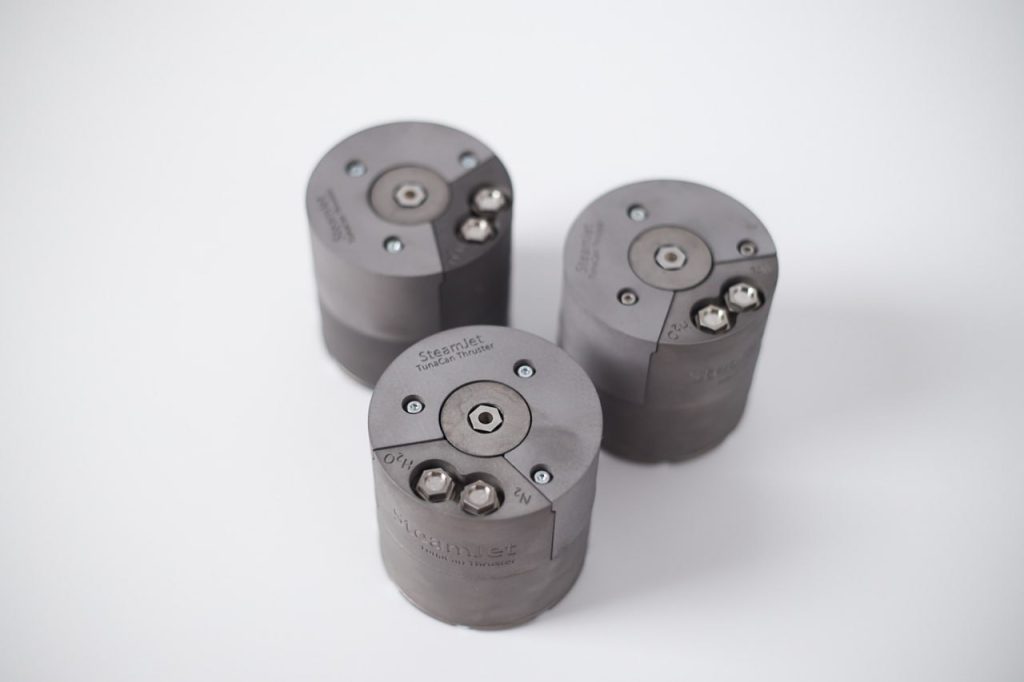
TunaCan is a compact, steam-based satellite thruster tailored specifically for academic CubeSat missions and early-stage research programs. The system delivers safe operation, simple integration, and full compatibility with existing CubeSat propulsion workflows.

Why CubeSat Propulsion Often May Be Challenging

Implementing CubeSat propulsion systems presents particular difficulties for academic teams. In particular, the following factors often create challenges:

  • Limited space and volume: many thrusters are too large for a CubeSat, reducing available space for payloads and other mission-critical systems.
  • Safety and handling requirements: high-pressure tanks and hazardous propellants require additional safety and regulatory measures.
  • Complex system integration: smaller and less-experienced teams face different issues with numerous requirements, timelines, and more.

These factors are especially pronounced for student-led projects and early-career researchers because the resources are limited and timelines are quite tight. In such cases, a CubeSat propulsion system that requires months of integration time may not be the most efficient solution.

TunaCan water-based CubeSat propulsion system for academic missions

TunaCan Thruster: A New CubeSat Propulsion Solution

TunaCan is a satellite thruster with a simple integration that doesn’t compromise its functionality. Our compact, water-based CubeSat propulsion system allows for eliminating many traditional barriers associated with satellite thrusters.

Main advantages:

  • First, the TunaCan thruster mounts outside of the satellite, therefore, it preserves valuable internal space for payloads. Some carriers integrate it inside a specific type of small satellite deployer.
  • In addition, TunaCan satellite thruster utilizes water as its propellant making it safe for academic environments and lab settings because there are no risks associated with high-pressure tanks and hazardous materials.
  • Moreover, straightforward integration requires minimal preparation time.
  • Finally, the system supports diverse mission applications with advanced performance and operational flexibility.

The TunaCan satellite thruster provides a dependable CubeSat propulsion solution ready for a wide range of student satellite missions and academic CubeSat missions.

CubeSat Propulsion Solution Available for University Missions

TunaCan satellite thruster is a flight-proven solution designed to offer high functionality, safety, and simple integration – all at a cost accessible to universities and research institutions. You can find all the technical documentation and CAD models on our website. If your mission requires reliable, low-complexity propulsion, we’d be happy to help. TunaCan satellite thruster is a perfect CubeSat propulsion solution for university teams – reach out to learn how the TunaCan CubeSat thruster can power your next academic space mission.

Additional technical information is available on our website, including specifications, performance data, and recent test results. Steam TunaCan Thruster and Steam Thruster One – both examples of new space engines developed by SteamJet Space – are shaping the future of sustainable satellite propulsion and advancing spacecraft propulsion technologies.

Ensuring Performance and Reliability: The Testing Process Behind SteamJet Thrusters

SteamJet space propulsion system

SteamJet water propulsion for CubeSats undergoes a rigorous testing process to ensure maximum reliability and performance. In addition, our water-based satellite thrusters are designed to provide safe and sustainable propulsion for CubeSat missions, from laboratory integration to real in-orbit operation.

Our water propulsion for CubeSats has been thoroughly tested across various missions, including partnerships with Above the Clouds and PHi Demo missions, to confirm their ability to tackle space challenges. Moreover, these tests are crucial in supporting small satellite developers seeking reliable, sustainable propulsion solutions.

Starting with the initial PHi Demo mission in collaboration with the Mohammed bin Rashid Space Centre (MBRSC), launched aboard the Soyuz rocket, to the mission with the SatRevolution team aboard the Virgin Orbit launch vehicle, every mission has offered essential insights. This experience helped us refine and validate the effectiveness of our propulsion technology.

SteamJet thrusters undergo multiple testing phases to guarantee that they are entirely ready for the space mission.

Operational Condition Simulation for Water Propulsion for CubeSats

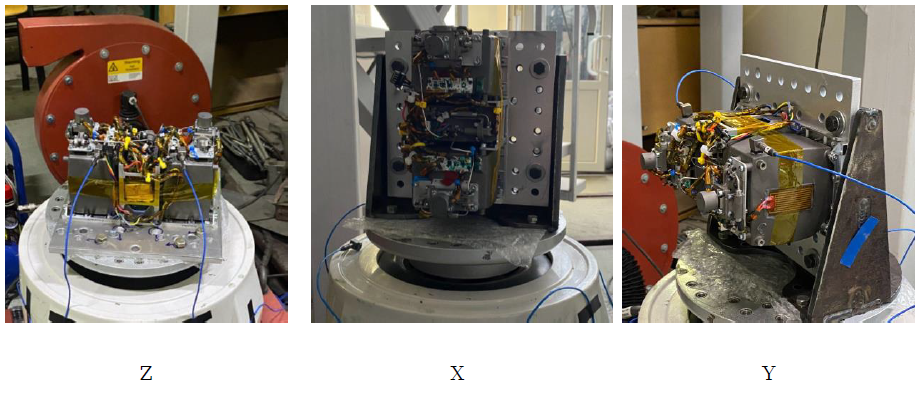
Satellite thruster systemSatellite thruster systems must be tested to ensure their reliability. Thus, it is crucial to simulate operational conditions during the development process. There are multiple external factors that affect the thruster at the launch, which are outlined in the launch vehicle manual. Potential issues involve vibrations, acceleration and the abrupt forces on both first and second stages. A vibrodynamic test bench simulates these vibrations, reproducing the unique characteristics of the launch vehicle.

First, a qualification copy is tested on a vibrodynamic bench to apply stress 20-40% higher than what the thruster is expected to experience on the launch vehicle itself. Next, the final product intended for the customer, undergoes an additional 12-20% overload.

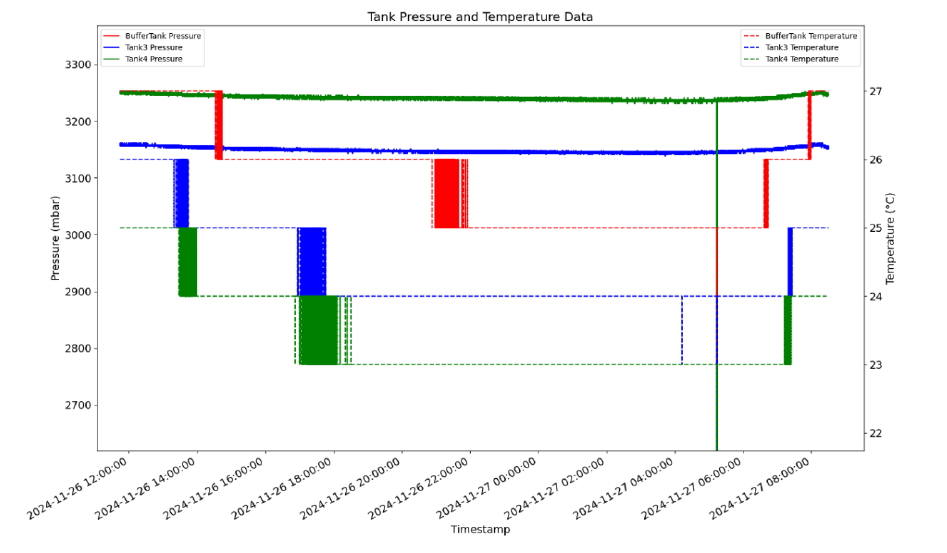
Meanwhile, in orbit, space propulsion systems face a set of challenges, namely temperature fluctuations and low pressure. The thrusters transition from extreme heat to cold 16 times a day, but the water inside must remain sealed and functional. A thermal vacuum chamber is used to simulate the space environment, cycling through these extreme conditions.

After completing vibration and thermal vacuum tests, we can confirm that thrusters will perform reliably. As a result, key parameters must not be compromised, namely thrust, specific impulse, and seal integrity. Each thruster is certified to leave the lab after ensuring that it can withstand all these factors.

All the reports and functional tests are reviewed by the customer to verify that the propulsion technology performed predictably and within the technically justified tolerances under operational conditions.

Integration into Satellite

Once a satellite thruster has passed all qualification phases, it’s ready to be integrated into the small satellite platform. After it is integrated into the satellite, the customer repeats all the same steps. Teams of both missions, the PHi Demo mission and “Above the Cloud”, received fully functional and tested thrusters. They integrated thrusters into their equipment and successfully performed all the tests.

Our team participated in the acceptance process, we reviewed all the reports and test forms with the mission system engineers. We also took part and provided training in the thruster fueling, either at the launch site or in the laboratory.

SteamJet space propulsion systems successfully passed every testing stage in both missions, the PHi Demo mission and the “Above the Cloud” mission. Our water-based propulsion technology demonstrated exceptional reliability, and small satellite developers received fully functional and high-quality thrusters that meet all the performance standards.

We are dedicated to quality and accuracy, these missions showcase SteamJet’s capacity to provide dependable, advanced satellite thrusters that are fully operational in space.

More technical information regarding the thrusters is available on our website. This includes specifications, performance data, and recent test results. Steam TunaCan Thruster and Steam Thruster One. Discover how SteamJet innovations are shaping the future of sustainable satellite propulsion.